
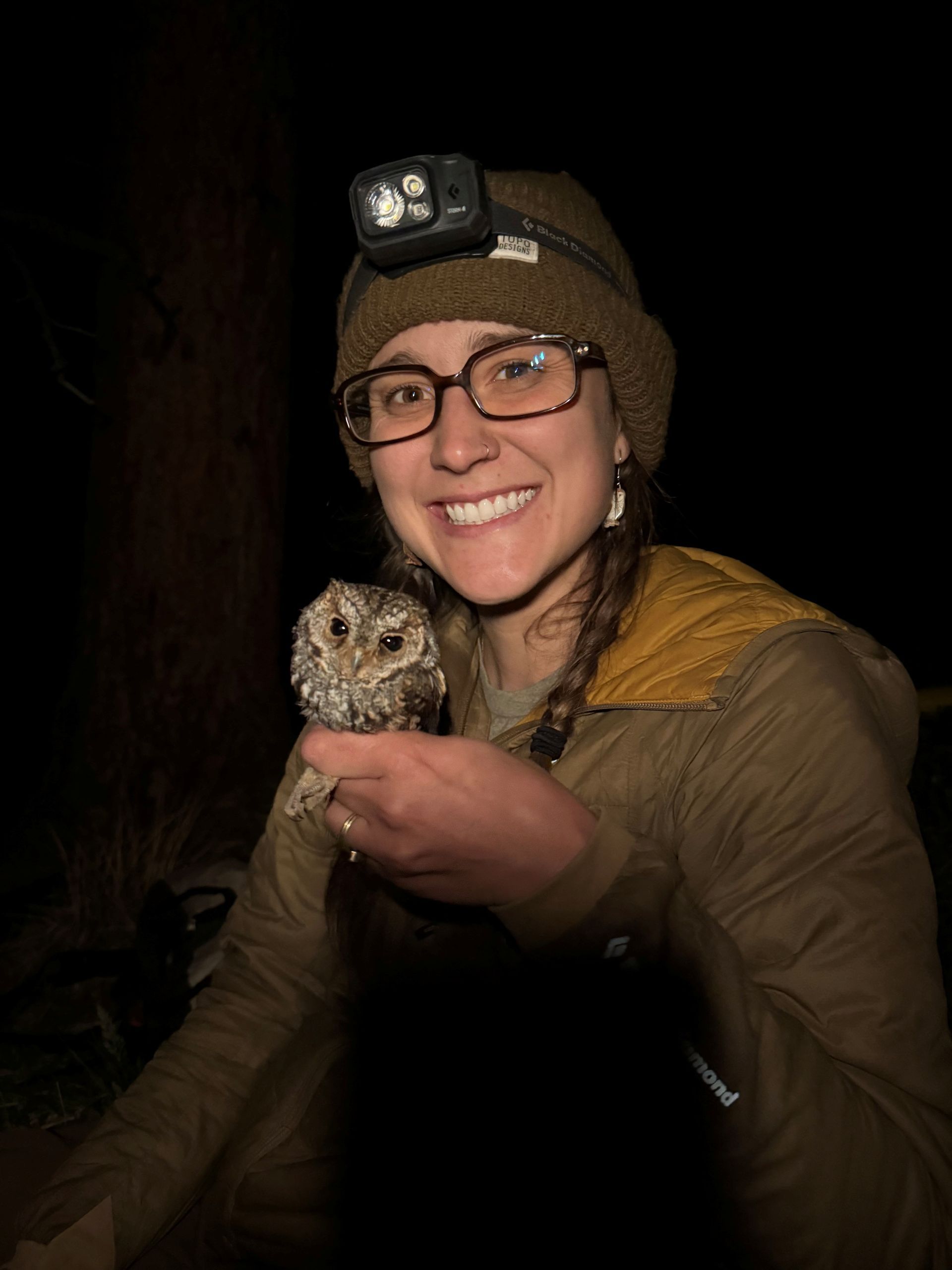
Flammulated Owl Ecology in an Age of Rapid Change with Dr Kate McGinn
Feb 18, 2027
—
Feb 18, 2027
Online
Speaker Series
Flammulated Owls are sentinels of the open, mature ponderosa pine forests of Colorado. However, these forests are rapidly changing as wildfires in western North America are increasing in size and severity. Long-term research on Flammulated Owls in Colorado provides a unique opportunity to examine how these changes influence owl populations over time. In collaboration with Dr. Brian Linkhart, who has studied this species for decades, I have recently resumed demographic surveys in burned and fuels-treated forests and repeated call-back surveys originally conducted in the Hayman Fire area in 2004–2005. In this talk, I will discuss what this long term-research has revealed about Flammulated Owl behavior, life history, and the species’ response to environmental change, including how breeding activity, reproductive success, and habitat use vary due to natural and anthropogenic disturbance. These findings may inform how fire-prone ponderosa pine forests can be managed while maintaining habitat for this iconic forest species.
Dr. Kate McGinn has spent the past decade studying the effects of climate change and disturbance on North American owls. As an undergraduate at Colorado College, Dr. McGinn conducted a peer-reviewed study quantifying diel variation in Flammulated owl space use. Her doctoral work examined the effects of heat waves on California spotted owls, which contributed to the petition to list the subspecies under the Endangered Species Act. As a Research Scientist, Dr. McGinn studied the relative effects of wildfire and forest management on forest owls in the Sierra Nevada. Currently a Visiting Assistant Professor at Colorado College, Dr. McGinn trains undergraduates in field methods while studying the life history of Flammulated owls in disturbed landscapes. Her lab’s current work seeks to understand how atypical disturbances and management actions shape the persistence of an iconic species in Colorado’s ponderosa pine ecosystems.